One Movement. 24 Medals. And the Coaching Fix Nobody's Talking About.
The Bloc Life Breakthrough Report exists to surface the stories, developments, and resources that matter most to the communities we serve: people with disabilities, veterans, and first responders. Every month, we cut through the noise to highlight real progress happening in adaptive fitness, veteran wellness, and the organizations building infrastructure for underserved populations.
This month features a practical exercise breakdown for adaptive athletes and coaches, alongside two stories that prove the landscape is shifting. The seated kettlebell deadlift is one of the most functional movements an adaptive athlete can perform from a wheelchair, requiring nothing beyond a kettlebell and the chair you're already in. Oksana Masters just left the Milano Cortina 2026 Winter Paralympics as the most decorated U.S. Winter Paralympian in history with 24 career medals. And in Carrollton, Texas, Soldiers To Sidelines partnered with the Wounded Warrior Project to train coaches who actually understand how to work with adaptive athletes rather than guessing their way through it.
One featured movement. Two stories. One shared principle: systems should adapt to people, not the other way around.
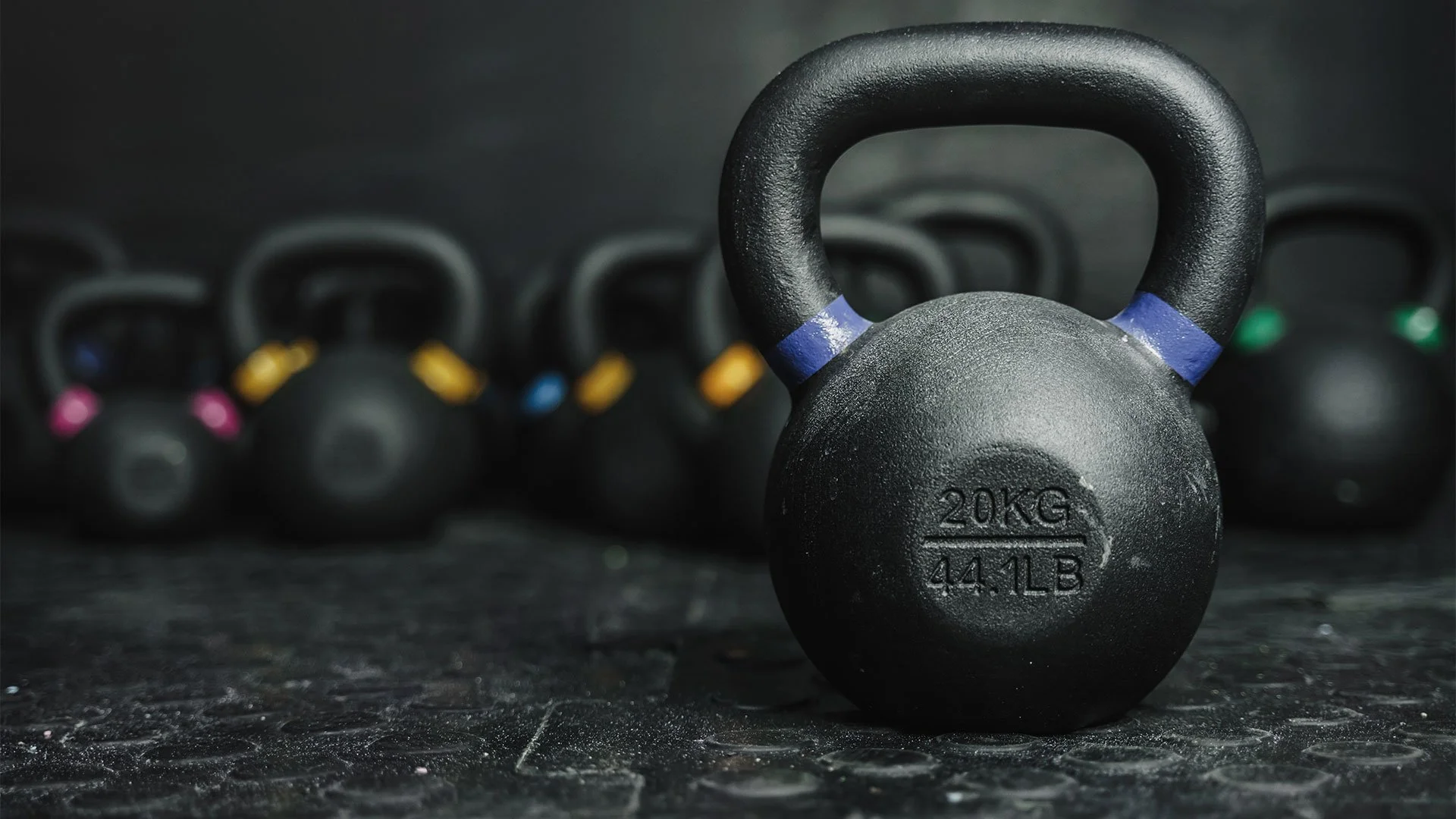
The Seated Kettlebell Deadlift: A Foundational Movement for Adaptive Athletes
The deadlift is one of the most fundamental human movement patterns. It trains the body to pick things up safely and efficiently. For adaptive athletes training from a seated position, the kettlebell variation preserves the core benefits of the movement while adapting execution for wheelchair use (Physiopedia, n.d.).
How the Movement Works
Place two kettlebells just outside the wheels of the wheelchair, handles accessible from a seated position. Grip the kettlebell horns firmly. Before lifting, establish a neutral spine and activate the muscles of the upper back by pulling the shoulder blades slightly together and down (Physiopedia, n.d.).
The lift itself uses the trunk extensors. From the starting position with a slight forward lean, engage the core and extend the torso upward, pulling the kettlebells off the floor into a fully upright seated position. Control the descent back to the starting position. That is one rep.
Why This Movement Matters
This is not a watered-down version of a "real" deadlift. The seated kettlebell deadlift targets the posterior chain, trunk extensors, upper back, grip strength, and core stability (Physiopedia, n.d.). These are the exact muscle groups responsible for posture, wheelchair propulsion, and daily functional tasks like picking up objects, transferring, and maintaining seated balance.
For adaptive athletes in high-intensity functional training environments like Chalk Up for Burpees, the seated deadlift serves as a building block for more complex movements. It teaches bracing patterns, reinforces safe loading mechanics, and builds confidence under load.
Programming Considerations
Start light. Two light kettlebells allow the athlete to focus on form, spinal alignment, and controlled tempo before adding weight. Three sets of eight to ten reps at a moderate pace is a solid starting point. As strength builds, increase kettlebell weight incrementally and consider adding pauses at the top position to build isometric strength.
Coaches should pay attention to compensatory movement. If the athlete is rounding the upper back excessively or losing neutral spine during the pull, the weight is too heavy. Reduce load, reinforce form, and progress from there. Additional modifications may be needed based on each individual's level of trunk control, grip capability, and seated stability (Physiopedia, n.d.).
The Challenged Athletes Foundation's adaptive fitness guide also highlights that resistance training from a seated position benefits shoulder stability, posture, and reduces the risk of repetitive strain injuries common among wheelchair users (Challenged Athletes Foundation, 2024). Pair the seated deadlift with upper back and rear deltoid work to create a balanced pulling program.
Physiopedia. (n.d.). Deadlift exercise: Wheelchair adaptation. https://www.physio-pedia.com/Deadlift_Exercise
Challenged Athletes Foundation. (2024, July). Adaptive fitness techniques for at home or the gym. https://www.challengedathletes.org/adaptivefitnesstechniques/
Oksana Masters Leaves Milano Cortina With 24 Career Paralympic Medals
The 2026 Milano Cortina Winter Paralympics closed on March 15 after ten days of competition across six sports, featuring 611 athletes from 55 nations (International Paralympic Committee, 2026). Team USA finished second in overall medals with 24, including 13 gold, matching its strongest gold-medal performance in the last two decades (U.S. Olympic and Paralympic Committee, 2026).
The standout story is Oksana Masters.
Masters arrived in Italy already holding the title of most decorated U.S. Winter Paralympian. She left with five more medals, four of them gold, bringing her career total to 24 across both summer and winter Games (NPR, 2026). She is now the third most-decorated Paralympian in U.S. history. This was her eighth Paralympic Games.
What makes Masters' performance remarkable beyond the medal count is the context. Just two days before the opening ceremony, she disclosed on social media that she had been in and out of hospitals dealing with a concussion and a recurring leg infection that disrupted her training (NPR, 2026). She was uncertain whether she would make it to the start line at all.
She won gold in her first event.
The U.S. sled hockey team continued their unprecedented dominance, winning a fifth consecutive Paralympic gold medal and outscoring opponents 46 to 6 throughout the tournament (U.S. Olympic and Paralympic Committee, 2026). A record 11,500 spectators attended the gold medal final against Canada. Four-time Paralympian Jake Adicoff earned four gold medals in four races in Para cross-country skiing, setting a record for the most gold won by a Team USA athlete in that discipline at a single Games (U.S. Olympic and Paralympic Committee, 2026).
Why the 2026 Winter Paralympics Matter for Adaptive Fitness
The 50th anniversary edition of the Winter Paralympics demonstrated something that matters beyond podium finishes: adaptive sport is growing, and the infrastructure supporting it is improving. The opening ceremony at the Arena di Verona included extensive accessibility renovations to the first-century Roman amphitheater, a structural investment in inclusion rather than a temporary accommodation (International Paralympic Committee, 2026).
Masters' approach to her career reflects a principle Bloc Life operates on daily: daily structure, unprecedented support, and real accountability produce results over time, not overnight transformations. Masters has competed across four different sports over eight Games spanning fourteen years. That is consistency compounded.
Her post-Games advice aligns directly with the philosophy behind community-based adaptive fitness programming. Rather than chasing dramatic milestones, she emphasized building incrementally and refusing to measure personal progress against anyone else's timeline (NPR, 2026). That is not generic motivation. That is the operational reality of long-term athletic development for adaptive athletes who face variable health conditions, equipment limitations, and systemic access barriers every single day.
International Paralympic Committee. (2026). Milano Cortina 2026 Paralympic Winter Games. https://www.paralympic.org/milano-cortina-2026
U.S. Olympic and Paralympic Committee. (2026, March 15). Grazie, Italia! Team USA delivers top-two finish in gold and overall medals at Milano Cortina 2026 Paralympics. https://www.usopc.org/news/2026/march/15/grazie-italia-team-usa-delivers-top-two-finish-in-gold-and-overall-medals-at-milano-cortina-2026-paralympics
NPR. (2026, March 17). 2026 Paralympics brings Oksana Masters' medal count to 24. https://www.npr.org/2026/03/17/nx-s1-5749163/oksana-masters-2026-winter-paralympics-medals
Soldiers To Sidelines Trains Coaches to Actually Serve Adaptive Athletes
On March 14, 2026, Soldiers To Sidelines hosted an Adaptive Athlete Workshop at the Adaptive Training Foundation in Carrollton, Texas. Powered by the Wounded Warrior Project, the workshop brought together coaches and leaders committed to learning how to work effectively with adaptive athletes and the military community (Soldiers To Sidelines, 2026).
This matters because the coaching gap is one of the least discussed barriers to adaptive fitness participation. Millions of veterans live with service-connected disabilities that affect their ability to maintain physical and mental wellness. Access to knowledgeable coaching plays a direct role in whether those individuals engage with fitness programming or avoid it entirely (Soldiers To Sidelines, 2026).
The workshop was led by Soldiers To Sidelines Founder Harrison Bernstein and Adaptive Athlete Director Emily Kramer Throckmorton. The day focused on practical coaching strategies, the connection between mind, body, and purpose, and how to create environments where adaptive athletes feel competent rather than accommodated (Soldiers To Sidelines, 2026).
Participants practiced coaching adaptive exercises with their classmates, gaining hands-on experience in delivering clear, effective instruction. This component moved the workshop from theory to application, which is where most coaching education programs fall short. Knowing that adaptive athletes exist and knowing how to cue a movement for someone with limited trunk control are two very different skill sets.
Why Adaptive Coaching Workshops Expand Access Beyond Equipment
A gym can have every piece of adaptive equipment available and still fail adaptive athletes if the coaching staff does not know what to do with it. Equipment is necessary but not sufficient. The person programming the workout, cueing the movement, and adjusting intensity in real time is what determines whether an adaptive athlete comes back the next day.
Soldiers To Sidelines addresses the human infrastructure side of adaptive fitness. Their model connects military veterans to coaching certification pathways while simultaneously improving the quality of coaching available to adaptive athletes. That is a two-sided solution: purpose and employment for transitioning service members, better fitness experiences for people with disabilities.
Bloc Life's partner gym model works on the same principle. When we bring adaptive programming into existing community gyms, we are not just adding a wheelchair ramp. We are embedding knowledge into coaching staffs so that adaptive athletes receive the same quality of instruction as any other member. The Soldiers To Sidelines workshop reinforces that this training pipeline matters and that organizations willing to invest in coach education are building something sustainable.
Soldiers To Sidelines. (2026, March 19). Empowering coaches to lead adaptive athletes: 2026 Adaptive Athlete Workshop recap. https://soldierstosidelines.org/coaching-workshop/empowering-coaches-to-lead-adaptive-athletes-2026-adaptive-athlete-workshop-recap/
About The Bloc Life Breakthrough Report
The Bloc Life Breakthrough Report exists to highlight and elevate positive stories and advancements in the veteran, first-responder, and adaptive-athlete communities that aren't always covered in mainstream media. We believe these stories deserve visibility, and the people behind them deserve recognition.
Have a Story We Should Feature?
Know about a breakthrough, achievement, or initiative in the veteran, first responder, or adaptive athlete community that deserves attention? Submit your story for consideration and help us spotlight the work that matters.
Disclaimer: Featuring a study, story, or topic in this report does not constitute endorsement, support, or recommendation of any particular product, method, claim, or course of action. The Bloc Life Breakthrough Report covers advancements and developments affecting Veterans, First Responders, and Adaptive Athletes strictly for commentary and discovery purposes. This content should not be construed as medical, nutritional, psychological, or professional advice, nor as factual claims or guidance. Bloc Life is not prescribing, diagnosing, promoting, or advising any course of action; we are simply sharing what we find relevant or meaningful to the communities we serve. This report exists under fair use for purposes of commentary, criticism, and analysis. Readers should consult qualified professionals before making changes to their health, fitness, mental wellness, or lifestyle practices. If you are an author, researcher, publisher, or rights holder of any content referenced in this report and would like to request updates, modifications, or removal, please contact us directly. Bloc Life is committed to accuracy, proper attribution, and respect for intellectual property.